I watched labyrinth a long time ago on cable. I don't think it did that well which is a shame. Anyway it had interesting creatures design done by (or based on) the works of Brian Froud. Pictures of the different characters are available here.


I watched labyrinth a long time ago on cable. I don't think it did that well which is a shame. Anyway it had interesting creatures design done by (or based on) the works of Brian Froud. Pictures of the different characters are available here.
Since it's a tv series (6 episodes) there are a lot of characters. AI missed Edmunds brother Henry and when I asked specifically for him it thought he was Edmund's dad which is weird. I had to ask AI specifically for some as it just sort of skimmed over such as the Black Seal but it finally produced them when asked.


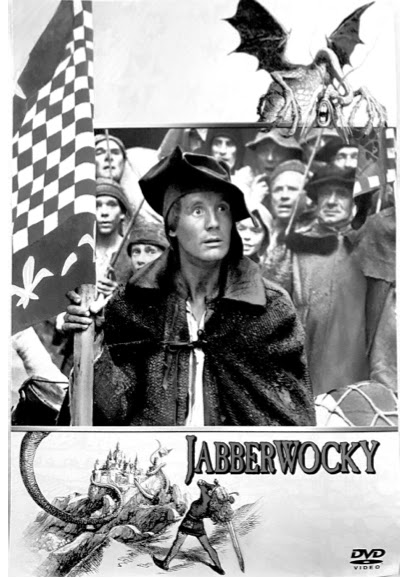
Another lost gem. Erik the Viking one ha a lot going on and is a bit more fantastic than Jabberwocky but there is some interesting things going on (Norse gods being children, Christian Priest unable to see mythic elements). It's fun if imperfect, but to be fair making bloodthirsty vikings funny is a tall job.
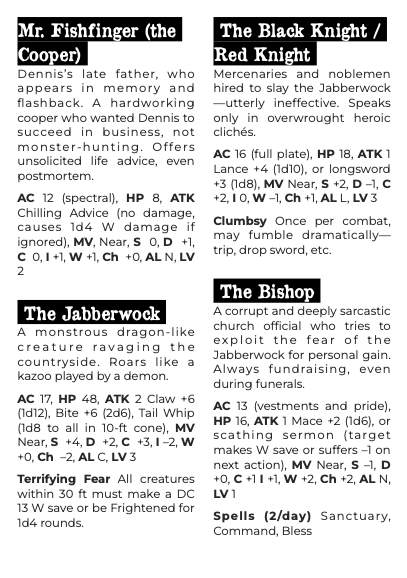
Anyway Statblocks for the main cast of Erik the Viking in case you need a few Sea Wolf statblocks for your campaign.

Well not super fun but things I would have liked to know back in the day. Also I've had these notes sitting around and don't know what to do with them so why not share them and move on.
Wine was common in the med area where the grapes were grown but less common in the North where it was cold and the wine had to be transported. In those areas ale and beer were more common, even among nobles.
Nobody had wine cellars as there were no bottles and corks until the 18th century. Wine came in casks and it didn't store very well as air could easily get into the casks and turn the wine into vinegar. So fresh "young" wine was generally drunk promptly and fetch a higher price than older wines.
To help the wines last longer some are fortified, that is mixed with brandy (called dessert wines in the US or liqueur wines in Europe these days).
Wine was often heavily watered down prior to consumption.
Brandy first appeared in the 12th century and was generally popular in the 14th. Brandy was developed to assist in transporting wine by removing a lot of the water through distillation which could be added back in later.
The reinheitsgebot (purity requirement or the German purity law) was originally written in Bavaria in 1487. This law concerned the sale and composition of beer and I have to believe the Germans were experimenting with various compositions before it was decided they had to lay down the law.
The law permits only water, barley and hops in beer. Yeast is not mentioned because the connection with yeast and microorganisms was unknown at the time although brewers generally took some sediment from the previous batch and added it to the next.
Hops are used as a preservative because apparently before the law some nasty ingredients were commonly used.
Germans turned beer from home-brew to major operations (8 to 10 employees in a brewery) with hopped beer and consistent barrel sizes and exports. This type of operation spread to Holland in the 14th century and reached England by the late 15th century. Laws to enforce the use of hops in beer were introduced in England in the 14th century and these laws led to uprisings that were brutally put down.
Bhang Kind of marijuana used in India from ancient times. Chewed?
Opium Used as an anesthesia and as a treatment for melancholy. Recommended treatment in the absence of a proper doctor. Purchased from an Apothecary. Opium is eaten. Which is said to make "dervishes draw with ecstasy, soldiers courage, and others bliss and voluptuousness"
Just read an old blogpost by DIY and Dragons about numbering corridors in a dungeon. Instead of commenting on an 5 year old blogpost I'll write my response here.
Corridors should feel dangerous. Most adventurers move around quietly hoping to take out the dungeon denizens in small groups. Corridors provide the danger of discovery. The PCs are exposed with nowhere to hide and potentially multiple doors for enemies to pour out of. Fighting is also constrained in a narrow area that could make combat far more interesting
Because of all that I think the way most games handle dungeons is sort of wrong. It creates a static environment. Adding numbers to hallways just adds to that static feel and does nothing for times the players return to a corridor later.
Long ago RuneQuest had a different system. They had the GM roll for every room and listed which inhabitants were there depending upon the results. This was a bit too much. My answer is somewhere in between.
Imagine two things:
During my current campaign I have four regular players. I'm willing to go forward with 3 out of 4 present but if we drop to 2 we'd s...